


Czaq
Member
TL;DR: Steal the angle, never the funnel. Find competitors who are clearly profitable (old running ads, ranking money pages), reverse engineer WHY they work, then build your own version. Copying their exact creative or article just puts you at the back of the line with none of their data.
Thats why spying on competitors is the fastest way to skip the learning curve, but only if you look at the right stuff with the right tools. Most people open a spy tool, glance at two ads, copy them, and wonder why it flops.
logic here is very simple. A competitor spending real money already ran the tests you'd otherwise pay to run. They burned the bad angles, killed the weak creatives, and landed on what works, all on their own dime. Your job is to read the answer off the page, not repeat the whole experiment. I'll use one niche the whole way down, a posture / back support product, and look at the same competition twice: once through SEO, once through social.
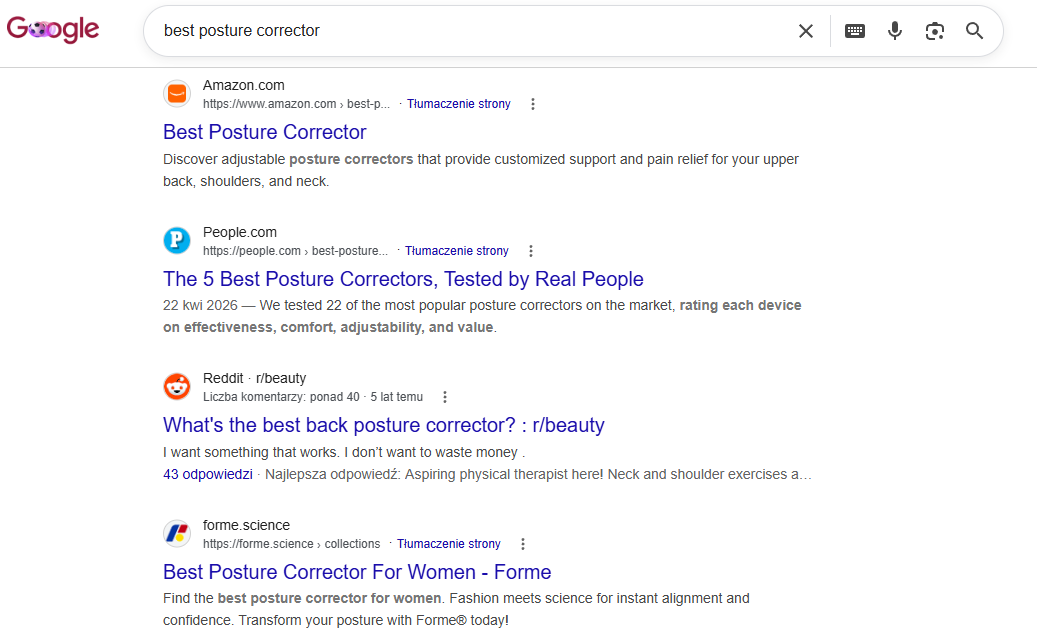
Don't guess. Type your main money keyword into Google ("best posture corrector", "lower back pain from sitting") and write down the page-one domains that AREN'T giant retailers (Amazon, Walmart, big box stores). Those are your real affiliate competition: review sites, niche blogs, single-product landers.
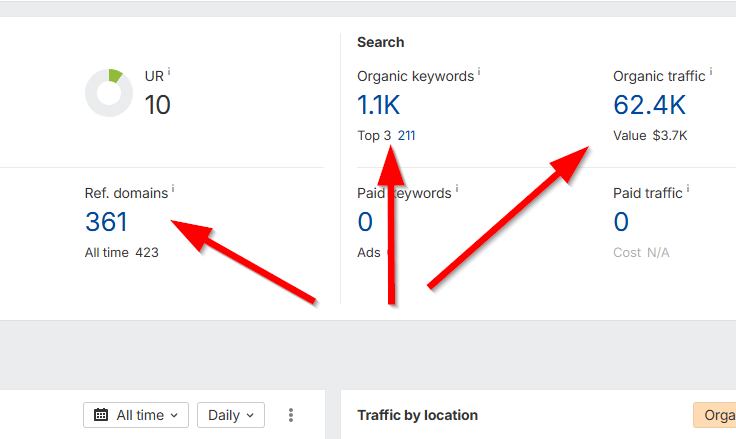
Ahrefs > Site Explorer > paste competitor.com. The Overview tab tells you the domain's health at a glance:
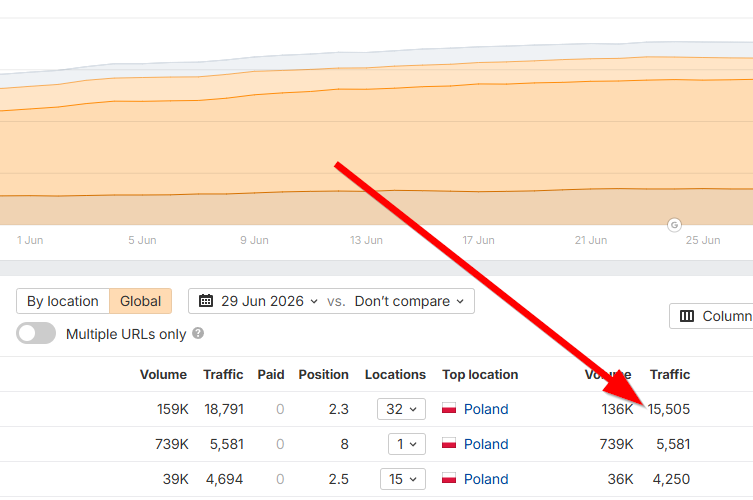
The Top Pages tab (under Organic search) lists their pages sorted by estimated traffic. This is the gold. If one article, say /lower-back-pain-at-your-desk, pulls 40% of the whole domain's traffic, you just found the answer to "what's selling here." The rest is usually noise.
In the posture example the strongest page isn't "posture corrector review." It's a guide titled "why your back hurts when you sit at a desk 8 hours a day." That's a problem-aware angle aimed at a specific group (office workers), not a product pitch. That's the insight you want.
The Organic keywords tab is the full list of keywords the domain ranks for, with position and volume. Filter to the top 10 positions. Here you see whether they're pulling traffic on product terms ("where to buy posture corrector") or problem terms ("stiff neck from sitting"). In our example the weight sits on high-volume problem terms, which backs up what Top Pages already told you.
The Content Gap tool (under Competitive analysis): enter your domain plus two or three competitors and Ahrefs spits out keywords THEY rank for that you DON'T. That's a ready-made content map. You don't have to invent topics, the competition already validated them with traffic.
The Best by links tab shows their pages with the most links, and Referring domains shows exactly who links to them. In the example the links come from health blogs and one big forum thread. Those are repeatable sources, you can go get the same ones for yourself. (SEMrush: Backlink Analytics.)
Putting it together: DR (beatable or not), number and quality of RD (natural profile or spammy), and domain age, which you can check with a free whois lookup (who.is). A domain with DR 40, a few hundred referring domains and a four-year history is a real target you can chase down
Go to facebook.com/ads/library, set the country, type an advertiser name or a keyword ("posture corrector"). What you read off each ad:
Biggest tell: when several different advertisers run the same angle (office worker + back pain) on different creatives, that means the ANGLE works, not one lucky ad.
Go to ads.tiktok.com/business/creativecenter > Top Ads. Filter by region, industry and time window. You'll see the top creatives with CTR and engagement ranges, plus what format and hook is pulling on TikTok specifically. The Trends tab shows trending sounds and hashtags, handy when you want to move a proven angle off Facebook and onto TikTok in a format that's native to the platform.
At adstransparency.google.com you can look up any advertiser and see the ads they're running across Google's network. Useful for checking whether a competitor is diversifying traffic beyond social.
This is where most people blow it. The obvious move is to copy that exact video and that exact advertorial and run it. Don't.
If you found a three-month-old ad, plenty of other people found it too. You copy the video, and now ten of you are running the same tired creative to the same audience. Facebook flags the duplicate, you're bidding against everyone else who copied it, with none of the original's pixel, test history or optimization. You inherit all the competition and none of the edge. Same deal in SEO: rewriting someone's article word for word is duplicate content and a dead start, and without their backlink profile you won't outrank them anyway.
Here's what I do instead. I take the ANGLE, desk-worker back pain, and build my own funnel around it. Specifically: I swap the office worker for a nurse on a 12-hour shift, same back pain insight, different person and setting, and I write a fresh pre-lander aimed at people on their feet all day instead of sitting. My own creative, my own voice, a comparable offer. Same proven pain, a corner of the audience the copy pile isn't already hammering.
There's a practical reason beyond saturation too. Lifting creatives and landers one to one can land you in copyright and compliance trouble with the network, the platform, or the original advertiser. Understanding WHY it works and rebuilding it keeps you clean and gives you something that's actually yours.
Free covers a ton. Facebook Ad Library, TikTok Creative Center and Google Ads Transparency Center cover the ad side of the three main platforms and cost nothing. Start there.
Paid earns its keep on SEO and native:
So what do you lean on when you size up a competitor? Curious especially about the native guys, where the read is way harder to get than on Facebook or in SEO.
GL and... hf!

Thats why spying on competitors is the fastest way to skip the learning curve, but only if you look at the right stuff with the right tools. Most people open a spy tool, glance at two ads, copy them, and wonder why it flops.
logic here is very simple. A competitor spending real money already ran the tests you'd otherwise pay to run. They burned the bad angles, killed the weak creatives, and landed on what works, all on their own dime. Your job is to read the answer off the page, not repeat the whole experiment. I'll use one niche the whole way down, a posture / back support product, and look at the same competition twice: once through SEO, once through social.
1: SEO, prying open a competitor's domain in Ahrefs
Ahrefs is paid (around $29/mo for the Lite plan or 99$ for full package - if you begginer you need only lite version) but it pays for itself fastest on competitor research. SEMrush does the same thing under different tab names, I'll give the equivalent where it matters.Step 1: figure out who your real competition actually is
Don't guess. Type your main money keyword into Google ("best posture corrector", "lower back pain from sitting") and write down the page-one domains that AREN'T giant retailers (Amazon, Walmart, big box stores). Those are your real affiliate competition: review sites, niche blogs, single-product landers.
Step 2: drop the domain into Site Explorer (Overview)
Ahrefs > Site Explorer > paste competitor.com. The Overview tab tells you the domain's health at a glance:
- DR (Domain Rating): backlink profile strength, 0 to 100. DR 40 is average but beatable, DR 70+ is a heavy hitter. (SEMrush calls this Authority Score.)
- Referring domains (RD): how many unique domains link to them. This matters way more than raw link count.
- Organic traffic: estimated monthly search traffic. Tells you the scale you're up against.
Step 3: Top Pages, the page that actually makes the money (most important)
The Top Pages tab (under Organic search) lists their pages sorted by estimated traffic. This is the gold. If one article, say /lower-back-pain-at-your-desk, pulls 40% of the whole domain's traffic, you just found the answer to "what's selling here." The rest is usually noise.
In the posture example the strongest page isn't "posture corrector review." It's a guide titled "why your back hurts when you sit at a desk 8 hours a day." That's a problem-aware angle aimed at a specific group (office workers), not a product pitch. That's the insight you want.
Step 4: Organic Keywords, what they rank for
The Organic keywords tab is the full list of keywords the domain ranks for, with position and volume. Filter to the top 10 positions. Here you see whether they're pulling traffic on product terms ("where to buy posture corrector") or problem terms ("stiff neck from sitting"). In our example the weight sits on high-volume problem terms, which backs up what Top Pages already told you.
Step 5: Content Gap, what YOU'RE missing
The Content Gap tool (under Competitive analysis): enter your domain plus two or three competitors and Ahrefs spits out keywords THEY rank for that you DON'T. That's a ready-made content map. You don't have to invent topics, the competition already validated them with traffic.
Step 6: backlinks, where they get their links
The Best by links tab shows their pages with the most links, and Referring domains shows exactly who links to them. In the example the links come from health blogs and one big forum thread. Those are repeatable sources, you can go get the same ones for yourself. (SEMrush: Backlink Analytics.)
Step 7: quick read on the domain itself
Putting it together: DR (beatable or not), number and quality of RD (natural profile or spammy), and domain age, which you can check with a free whois lookup (who.is). A domain with DR 40, a few hundred referring domains and a four-year history is a real target you can chase down
2: social, checking creatives, ad copy and landers (still important to realize task in seo too)
Facebook Ad Library (free)
Go to facebook.com/ads/library, set the country, type an advertiser name or a keyword ("posture corrector"). What you read off each ad:
- Start date / longevity, signal #1. Nobody burns money on a losing ad for two months, the math doesn't allow it. An ad that's been live two or three months is almost certainly a winner. Instead of guessing which of fifty creatives is good, filter for the oldest ones and you're staring at proven winners.
- Ad copy: the full primary text is right there. Pull the hook from the first line. In the example the winning hook is "if you sit at a desk 8 hours a day, here's why your lower back hurts by 3pm," same office-worker angle again.
- Creative: the format and the first 3 seconds of video. You're studying the mechanism (UGC-style, someone slumped at a desk), not lifting the file.
- Lander: click the ad and trace the path. In the example it went to an advertorial, "I'm a physio, here's what I tell every desk worker who walks in," then to the product page.
Biggest tell: when several different advertisers run the same angle (office worker + back pain) on different creatives, that means the ANGLE works, not one lucky ad.
TikTok Creative Center (free)
Go to ads.tiktok.com/business/creativecenter > Top Ads. Filter by region, industry and time window. You'll see the top creatives with CTR and engagement ranges, plus what format and hook is pulling on TikTok specifically. The Trends tab shows trending sounds and hashtags, handy when you want to move a proven angle off Facebook and onto TikTok in a format that's native to the platform.
Google Ads Transparency Center (free)
At adstransparency.google.com you can look up any advertiser and see the ads they're running across Google's network. Useful for checking whether a competitor is diversifying traffic beyond social.
Important rule: steal the angle, never your traffic funnel
This is where most people blow it. The obvious move is to copy that exact video and that exact advertorial and run it. Don't.
If you found a three-month-old ad, plenty of other people found it too. You copy the video, and now ten of you are running the same tired creative to the same audience. Facebook flags the duplicate, you're bidding against everyone else who copied it, with none of the original's pixel, test history or optimization. You inherit all the competition and none of the edge. Same deal in SEO: rewriting someone's article word for word is duplicate content and a dead start, and without their backlink profile you won't outrank them anyway.
Here's what I do instead. I take the ANGLE, desk-worker back pain, and build my own funnel around it. Specifically: I swap the office worker for a nurse on a 12-hour shift, same back pain insight, different person and setting, and I write a fresh pre-lander aimed at people on their feet all day instead of sitting. My own creative, my own voice, a comparable offer. Same proven pain, a corner of the audience the copy pile isn't already hammering.
There's a practical reason beyond saturation too. Lifting creatives and landers one to one can land you in copyright and compliance trouble with the network, the platform, or the original advertiser. Understanding WHY it works and rebuilding it keeps you clean and gives you something that's actually yours.
The process (so it doesn't turn into aimless scrolling)
- Pick ONE niche and ONE traffic source (SEO or one social platform), go deep, don't analyze everything at once.
- Find your real competitors: SEO through Google + Site Explorer, social through the ad library.
- SEO: pry open the domain > Top Pages > Organic Keywords > Content Gap > backlinks. Social: filter for longevity, then look for the same angle across different advertisers.
- Document every one (angle, creative hook, lander structure, offer, domain) in a simple sheet. You won't remember thirty ads.
- Map the full funnel from ad or article to offer for the two or three strongest.
- Look for the pattern across all of them, not the single best ad. You're reverse engineering the recipe, not photographing one finished dish.
3. Tools: free vs paid
Free covers a ton. Facebook Ad Library, TikTok Creative Center and Google Ads Transparency Center cover the ad side of the three main platforms and cost nothing. Start there.
Paid earns its keep on SEO and native:
- Ahrefs / SEMrush: unbeatable for digging into competitor domains, keywords, content and backlink profiles (Part 1 of this post).
- SimilarWeb: breaks down a competitor's traffic sources (search / social / direct) so you can see whether they lean on SEO or paid social.
- Anstrex / AdPlexity: earn their keep on native and push, where the free libraries are thin.
So what do you lean on when you size up a competitor? Curious especially about the native guys, where the read is way harder to get than on Facebook or in SEO.
GL and... hf!